TRAINING STRUCTURE / 7 MIN READ
Choose a small number of priorities
A development program works best when the group knows what each session is intended to address. Start with the players’ age, experience, training history and purpose for attending. Select a manageable set of priorities rather than trying to cover every basketball skill in every session. The schedule can rotate themes across days while maintaining a consistent structure for warm-up, skill practice, application and review.
Organizers should describe the session format clearly. Explain how players are grouped, how drills change for different levels and how much individual or team work is included. Avoid promising that a particular camp will produce a measurable performance result. Practice can provide repetition and feedback, but outcomes depend on many factors beyond one event.
Ball handling and passing
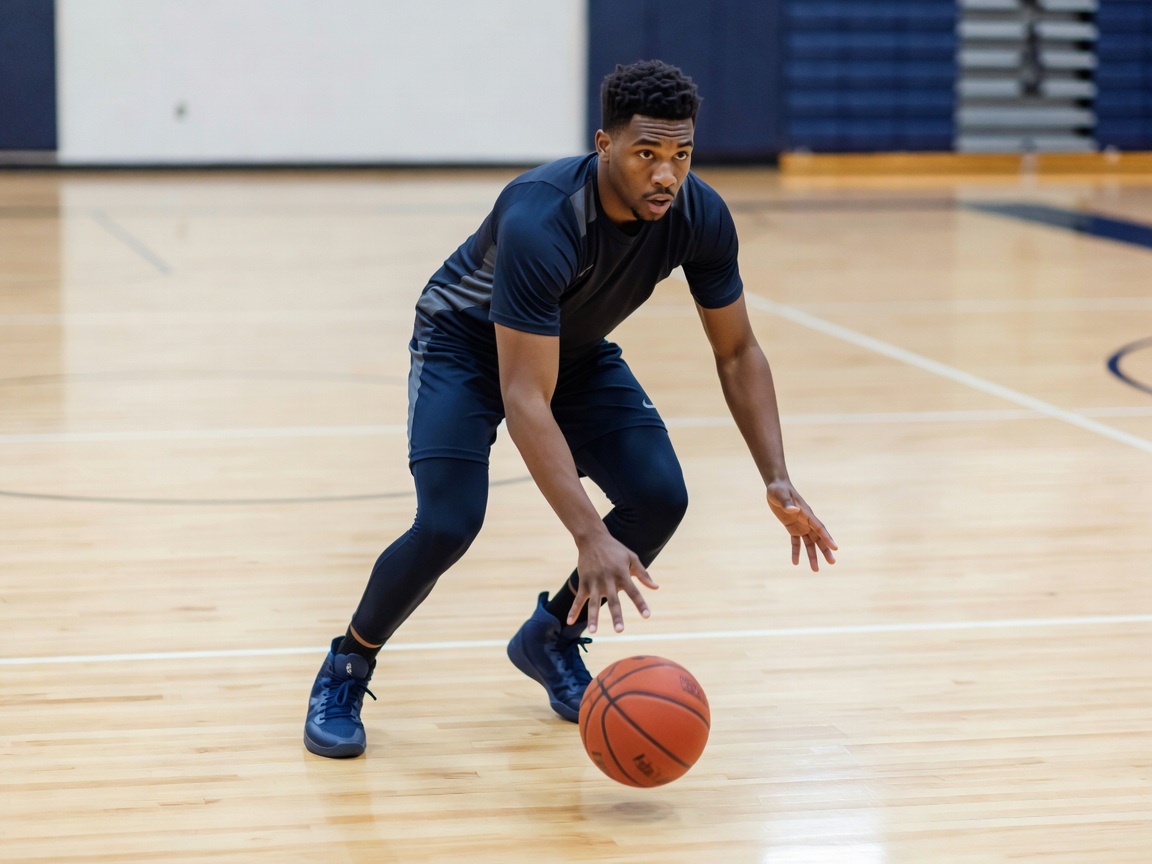
Ball handling blocks can include control with both hands, pace changes, direction changes and movement under pressure. Progress from a simple task to a more decision-based activity when the group is ready. Keep the objective visible: a drill should build control, scanning or a specific change of direction, rather than simply occupy time.
Passing work can cover accuracy, timing, catching preparation and choices made under defensive pressure. Pair technical repetitions with small-sided situations so players have to read space and teammates. Give concise feedback that identifies an observable action. For example, a player can focus on presenting a target or stepping into a pass. Feedback should guide the next repetition without overwhelming the player with multiple corrections.
Shooting, finishing and footwork
Shooting sessions can address balance, alignment, release consistency and shot selection. Organize stations to manage waiting time and rebound responsibilities. Record the drill conditions when reviewing practice; a made-shot count has little meaning without context about distance, pace and type of attempt. Keep the emphasis on a repeatable practice process rather than a promised result.
Finishing work can include approach angles, take-off choices, touch and decisions near the basket. Use progressions that allow players to learn the movement before adding defensive pressure. Footwork can be integrated into stops, pivots, changes of direction and defensive stance transitions. Make sure court space and participant numbers allow players to move safely and receive enough repetitions.
Defensive movement and tactical awareness
Defensive movement may include stance, balance, lateral movement, recovery steps and communication. Keep activities specific to the intended concept. Tactical awareness can be developed through short decision games, advantage situations and guided discussion. Players can learn to recognize spacing, help position, transition opportunities and when to pass, drive or reset.
Use simple constraints to highlight a decision. Then remove the constraint and see whether the group can apply the idea in a more open task. Tactical learning takes repetition and clear communication. One camp session should not be presented as a complete evaluation of a player’s ability or potential.
Conditioning, volume and recovery
Conditioning can be integrated into court activities or scheduled as a separate block. Plan volume across the full day, including warm-ups, competitive play and additional practice. Avoid scheduling every session at maximum intensity. Group members can differ in fitness and recent activity, so offer sensible adjustments and rest opportunities. Players should communicate concerns and manage personal limits.
Recovery is part of organizing a sustainable program. Include breaks, meals, hydration opportunities and time away from the court. This site does not provide medical advice, injury assessment or rehabilitation. Participants seeking individual health guidance should consult an appropriately qualified professional.
Feedback and progress tracking
Tracking should support learning, not create false precision. At the start, note the session objective and the behavior to observe. Afterward, record a brief reflection: what task was completed, what decision improved with practice and what needs another repetition. A player can keep a personal training log with dates, topics and self-assessment. Avoid collecting unnecessary sensitive information.
Feedback is most useful when it is timely, specific and actionable. Give players a chance to reflect before offering a correction. Set one practical next step and revisit it later. For youth groups, keep communication age-appropriate and follow the organizer’s safeguarding and parent communication procedures.
Connect the camp to future practice
Before the program ends, summarize themes covered and suggest general practice priorities for the group. Do not frame a brief camp as a scouting report, certification or professional assessment. A camp can organize focused time, provide structured repetition and help participants identify questions for future training. Continued development depends on consistent practice, feedback and a suitable plan after the event.